Pilgrimage places in Karnataka
Explore 33 major pilgrimage and sacred heritage destinations, including Sringeri, Udupi, Ganagapur, Kuravapur, Gokarna and Dharmasthala. Read devotional background, visitor guidance, accommodation and onward road routes.
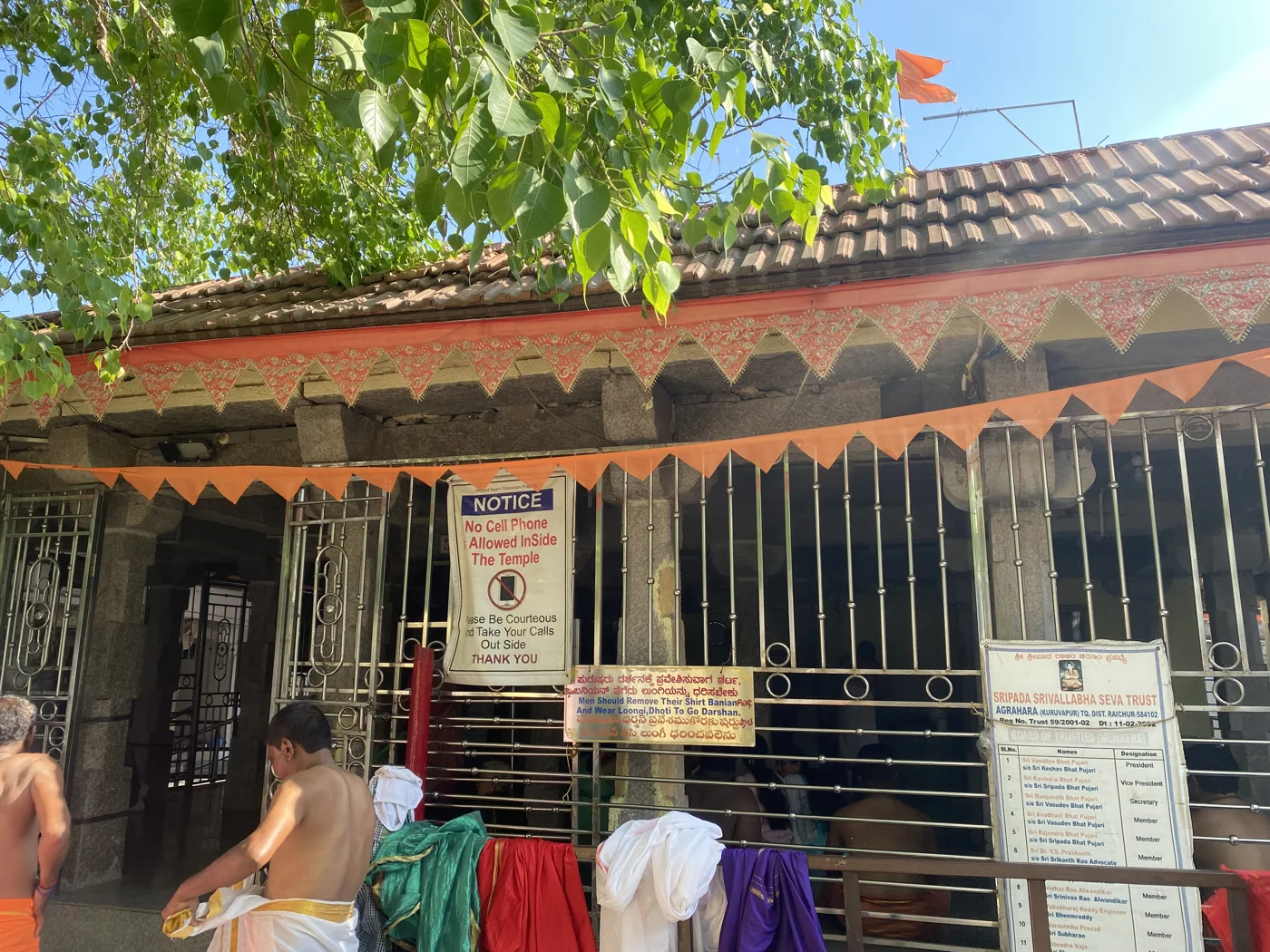
Kuravapur: Sripada Srivallabha’s island pilgrimage
A Datta shrine on an island in the Krishna River: its tradition, trains to Raichur, the road approach and preparation for the boat crossing.
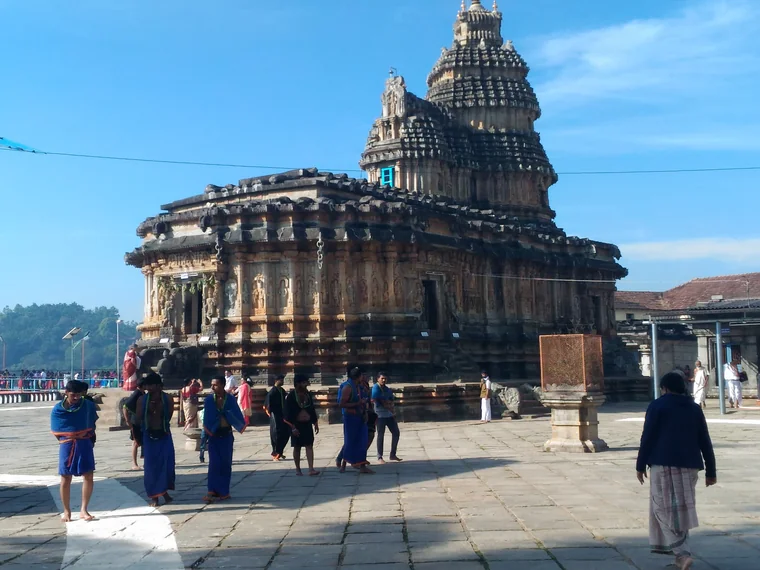
Sringeri: Sharadamba and Vidyashankara
Sringeri’s Sharada Peetham beside the Tunga is an Advaita centre, with separate Sharadamba and Vidyashankara temples. Allow time for the principal shrine and nearby shrines; ask the temple office about procedures and charges before arranging a ritual.
Horanadu / ChikkamagaluruHoranadu: Annapoorneshwari
Horanadu in the Western Ghats honours Annapoorneshwari and a tradition of food service; confirm present meal arrangements locally. Allow time for the principal shrine and nearby shrines; ask the temple office about procedures and charges before arranging a ritual.
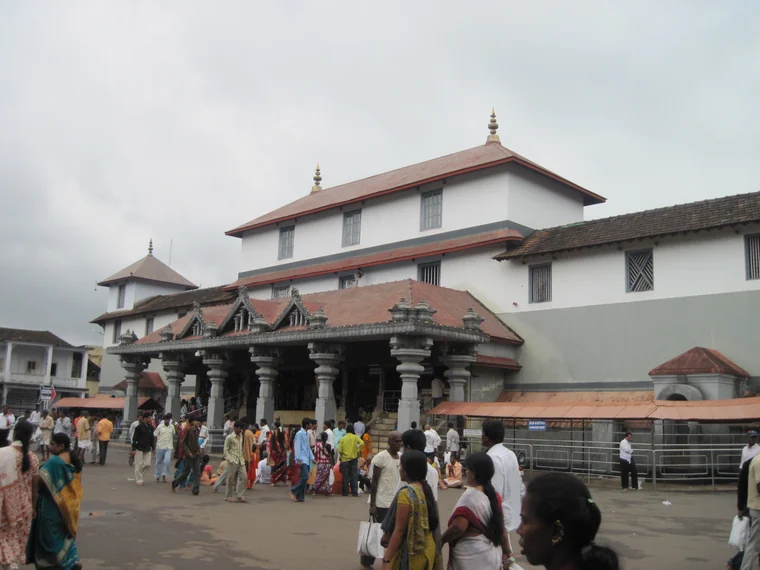
Dharmasthala: Manjunatha
Dharmasthala worships Shiva as Manjunatha; Jain Heggade stewardship and charitable service distinguish this pilgrimage centre. Allow time for the principal shrine and nearby shrines; ask the temple office about procedures and charges before arranging a ritual.
Subramanya / Dakshina KannadaKukke Subramanya
Kukke near the Kumaradhara is devoted to Subramanya and serpent worship traditions; ritual results should never be treated as guaranteed. Allow time for the principal shrine and nearby shrines; ask the temple office about procedures and charges before arranging a ritual.
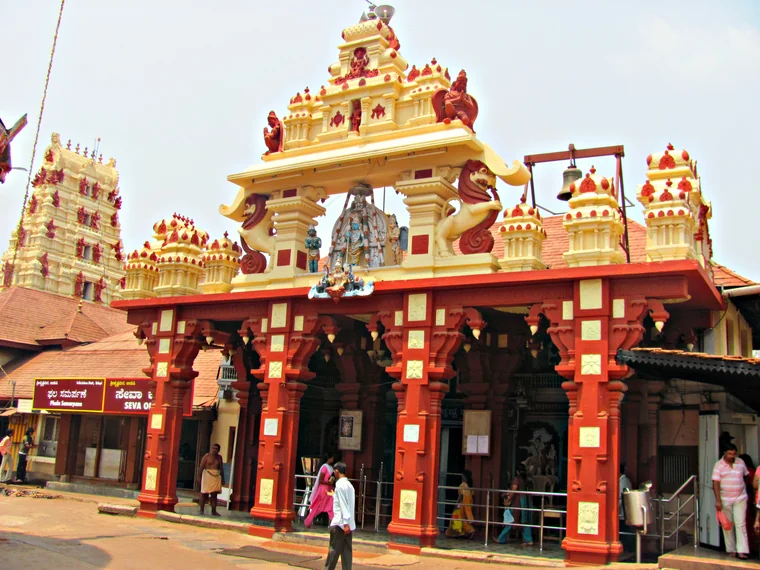
Udupi: Sri Krishna Matha
Udupi Krishna Matha is central to Madhva tradition; stories of Kanakadasa and Kanakana Kindi belong to its devotional heritage. Allow time for the principal shrine and nearby shrines; ask the temple office about procedures and charges before arranging a ritual.
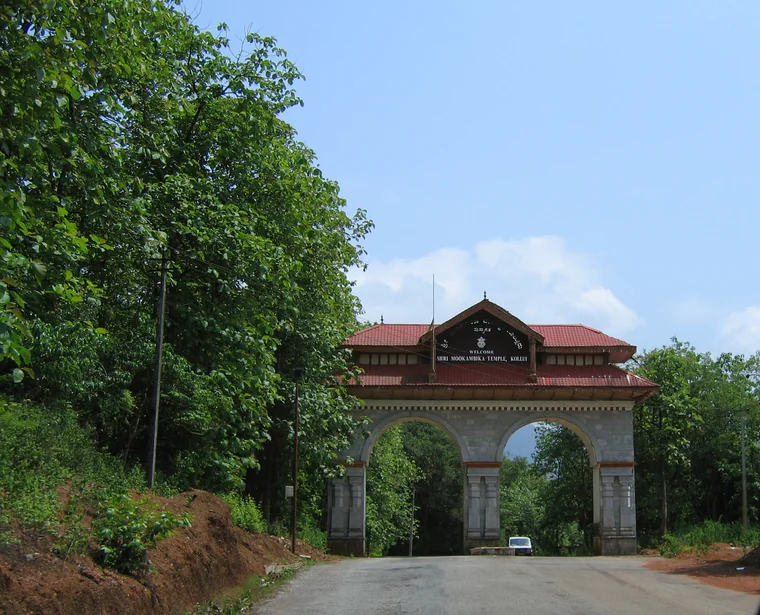
Kollur: Mookambika
Kollur near Kodachadri is a major Mookambika shrine; visiting the mountain is a separate excursion from temple darshan. Allow time for the principal shrine and nearby shrines; ask the temple office about procedures and charges before arranging a ritual.
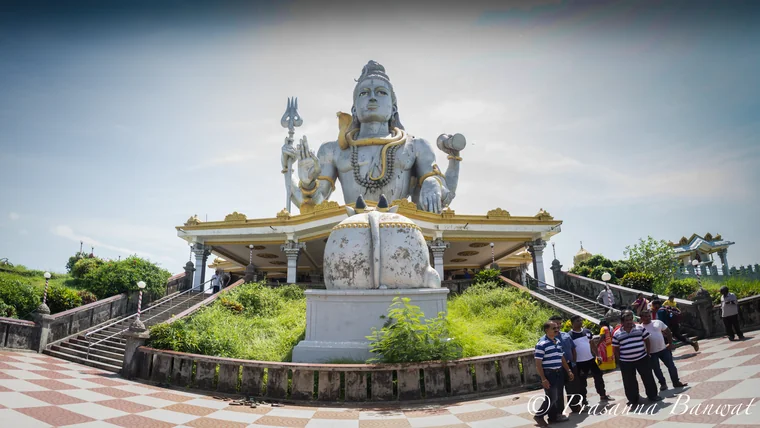
Murudeshwar
Murudeshwar is known for its seaside temple and large Shiva statue; plan the coastal viewpoints separately from worship. Allow time for the principal shrine and nearby shrines; ask the temple office about procedures and charges before arranging a ritual.
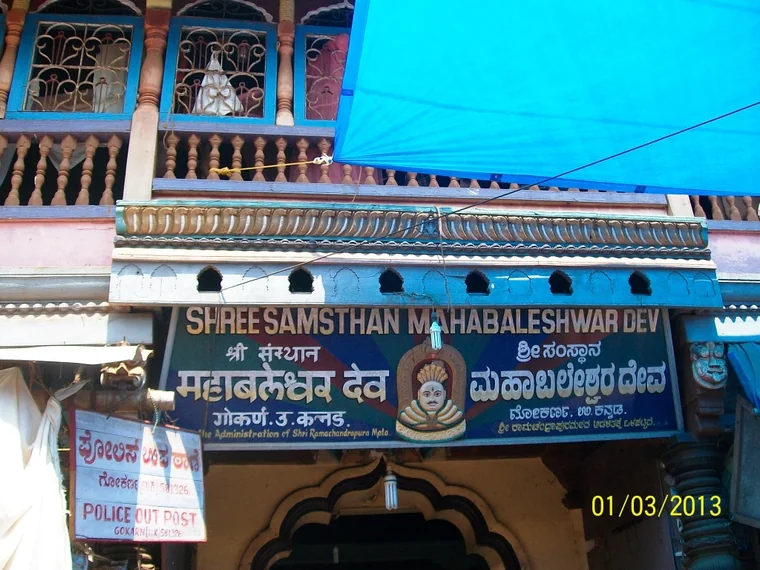
Gokarna: Mahabaleshwara
The Atmalinga at Gokarna’s Mahabaleshwara temple is linked to the Ravana narrative in religious tradition. Allow time for the principal shrine and nearby shrines; ask the temple office about procedures and charges before arranging a ritual.
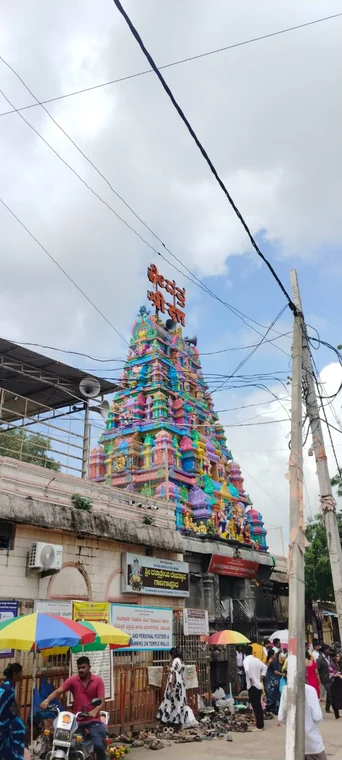
Ganagapur: Nirguna Padukas
Ganagapur venerates Nirguna Padukas in Narasimha Saraswati’s Datta tradition; the math and Bhima–Amaraja confluence are separate stops. Allow time for the principal shrine and nearby shrines; ask the temple office about procedures and charges before arranging a ritual.
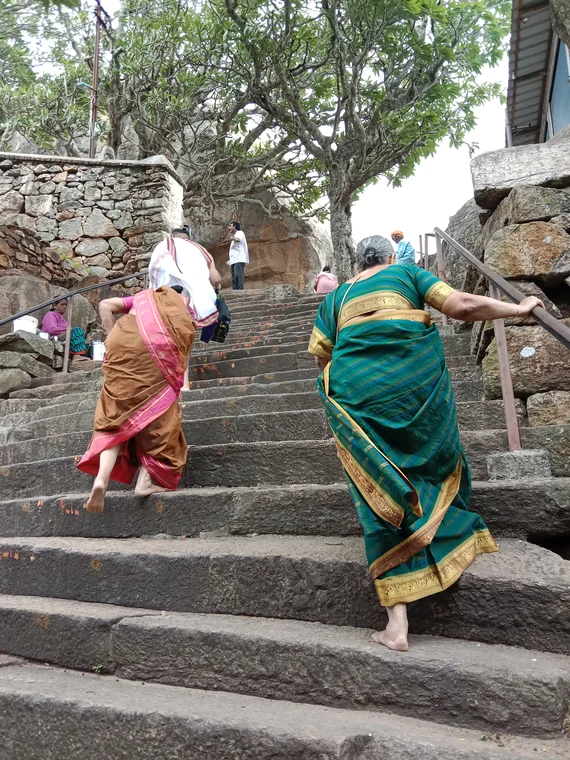
Melukote: Cheluvanarayana and Yoga Narasimha
Melukote is associated with Ramanuja’s Sri Vaishnava tradition; Cheluvanarayana in town and hilltop Yoga Narasimha are separate temples. Allow time for the principal shrine and nearby shrines; ask the temple office about procedures and charges before arranging a ritual.
Srirangapatna / MandyaSrirangapatna: Ranganathaswamy
Srirangapatna’s island temple worships reclining Vishnu as Ranganathaswamy; the town’s historical monuments are separate visits. Allow time for the principal shrine and nearby shrines; ask the temple office about procedures and charges before arranging a ritual.
Chamundi Hill / MysuruMysuru: Chamundeshwari
Chamundeshwari on Chamundi Hill is linked to Mysuru’s royal tradition and Dasara; the Mahishasura narrative is part of devotional tradition. Allow daylight for hill steps and the return; ask in advance about the current approach and assistance for older visitors.
Nanjangud / MysuruNanjangud: Srikanteshwara
Nanjangud on the Kapila honours Shiva as Srikanteshwara; Dakshina Kashi is a devotional name for this centre. Allow time for the principal shrine and nearby shrines; ask the temple office about procedures and charges before arranging a ritual.
Talakadu / MysuruTalakadu: Vaidyeshwara and temple group
Talakadu beside the Kaveri is known for Vaidyeshwara and the Panchalinga Darshana tradition; that festival is not a daily event. Allow time for the principal shrine and nearby shrines; ask the temple office about procedures and charges before arranging a ritual.
Somanathapura / MysuruSomanathapura: Keshava temple heritage
Somanathapura’s Keshava temple belongs to UNESCO’s Sacred Ensembles of the Hoysalas; visit as a protected architectural monument. Visit for its sacred architectural heritage; do not assume that regular worship or sanctum access is available.
Belur / HassanBelur: Chennakeshava
Belur’s Chennakeshava is a Vishnu shrine within the UNESCO Hoysala ensemble; observe carvings without disrupting worship. Allow time for the principal shrine and nearby shrines; ask the temple office about procedures and charges before arranging a ritual.
Halebidu / HassanHalebidu: Hoysaleshwara
Halebidu’s paired Hoysaleshwara shrines are dedicated to Shiva; their detailed carvings form part of UNESCO’s Hoysala ensemble. Visit for its sacred architectural heritage; do not assume that regular worship or sanctum access is available.
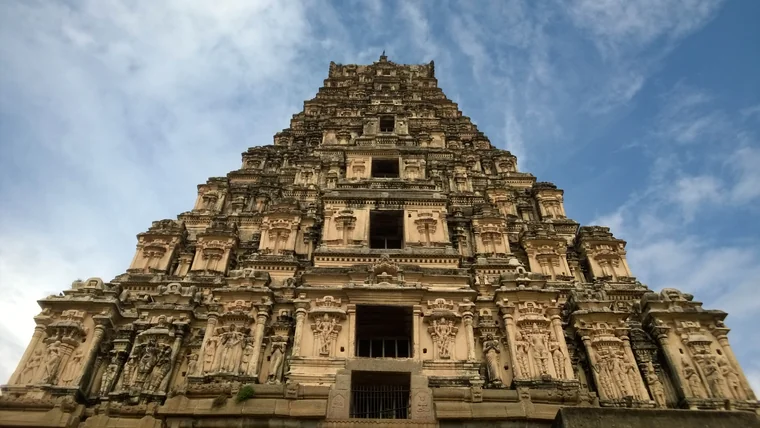
Hampi: Virupaksha
Virupaksha remains a Shiva worship centre within Hampi’s UNESCO-listed Vijayanagara landscape beside the Tungabhadra. Allow time for the principal shrine and nearby shrines; ask the temple office about procedures and charges before arranging a ritual.
Hampi / VijayanagaraHampi: Vittala temple heritage
The Vittala complex is known for its stone chariot and carved halls; do not strike pillars or climb sculptures. Visit for its sacred architectural heritage; do not assume that regular worship or sanctum access is available.
Badami / BagalkotBadami: cave temples
Badami’s rock-cut caves display Shaiva, Vaishnava and Jain imagery; allow time for the ascent and archaeological visit. Visit for its sacred architectural heritage; do not assume that regular worship or sanctum access is available.
Pattadakal / BagalkotPattadakal: Chalukya temple ensemble
UNESCO-listed Pattadakal combines northern and southern temple forms; allow separate visits to Virupaksha and the other monuments. Visit for its sacred architectural heritage; do not assume that regular worship or sanctum access is available.
Aihole / BagalkotAihole: temple architecture heritage
Aihole illustrates Chalukya architectural experimentation; the familiar name Durga Temple should not be read as a simple identification of its deity. Visit for its sacred architectural heritage; do not assume that regular worship or sanctum access is available.
Cholachagudda / BadamiBadami: Banashankari
Banashankari near Badami is a goddess pilgrimage centre known for its fair; distinguish it from Bengaluru’s Banashankari temple. Allow time for the principal shrine and nearby shrines; ask the temple office about procedures and charges before arranging a ritual.
Kudalasangama / BagalkotKudalasangama: Sangameshwara and Basavanna memorial
Kudalasangama at the Krishna–Malaprabha confluence is linked to Basavanna and Lingayat tradition; verify safe permitted river access before bathing. Allow time for the principal shrine and nearby shrines; ask the temple office about procedures and charges before arranging a ritual.
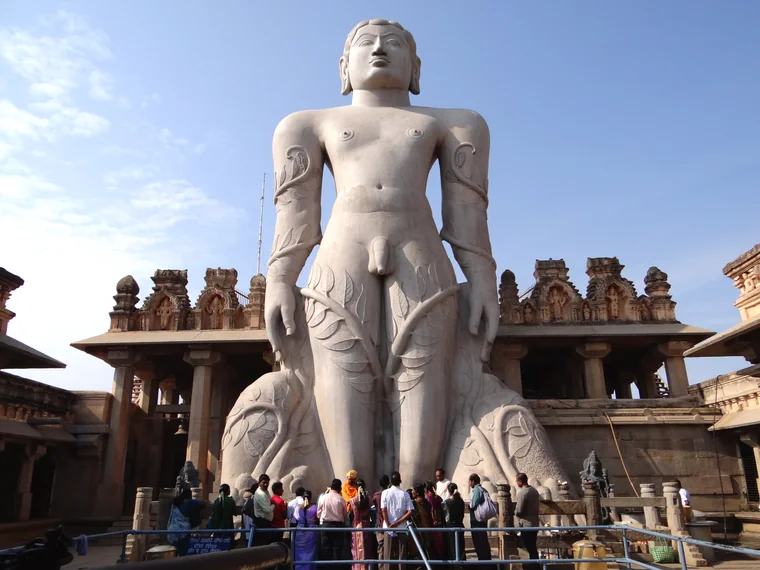
Shravanabelagola: Bahubali
The monolithic Bahubali on Vindhyagiri anchors this Jain pilgrimage; Chandragiri’s basadis stand on a separate hill. Respect Jain traditions of nonviolence and restraint. Confirm consecration ceremonies or major festival dates with the organisers.
Karkala / UdupiKarkala: Bahubali and Chaturmukha Basadi
Karkala is known for its Jain Bahubali statue and Chaturmukha Basadi; plan them as separate stops. Respect Jain traditions of nonviolence and restraint. Confirm consecration ceremonies or major festival dates with the organisers.
Venur / Dakshina KannadaVenur: Bahubali
Venur’s Bahubali statue marks a Jain pilgrimage centre; distinguish it from the statues at Karkala and Shravanabelagola. Respect Jain traditions of nonviolence and restraint. Confirm consecration ceremonies or major festival dates with the organisers.
Kateel / Dakshina KannadaKateel: Durgaparameshwari
Kateel’s Durgaparameshwari shrine stands in the Nandini river setting; follow local access guidance during heavy rain. Allow time for the principal shrine and nearby shrines; ask the temple office about procedures and charges before arranging a ritual.
Sigandur / ShivamoggaSigandur: Chowdeshwari
Sigandur Chowdeshwari lies in the Sharavathi reservoir region; the temple’s current directions include a road crossing by bridge. Allow time for the principal shrine and nearby shrines; ask the temple office about procedures and charges before arranging a ritual.
Saundatti / BelagaviSaundatti: Renuka Yellamma
Yellamma’s hill shrine near Saundatti honours Renuka; arrange transport and crowd-aware darshan plans before a fair visit. Allow daylight for hill steps and the return; ask in advance about the current approach and assistance for older visitors.
Devarayanadurga / TumakuruDevarayanadurga: Narasimha shrines
Devarayanadurga has separate Bhoga Narasimha and Yoga Narasimha temples; allow time for both levels of the hill setting. Allow daylight for hill steps and the return; ask in advance about the current approach and assistance for older visitors.
Shivagange / Bengaluru RuralShivagange: Gangadhareshwara
Shivagange hill is known for Gangadhareshwara’s Shiva shrine; higher climbing is more demanding than a basic temple visit. Allow daylight for hill steps and the return; ask in advance about the current approach and assistance for older visitors.